Tall Tales and Twang: The Secret Folklore Hiding in Plain Sight Inside Your Favorite Country Songs
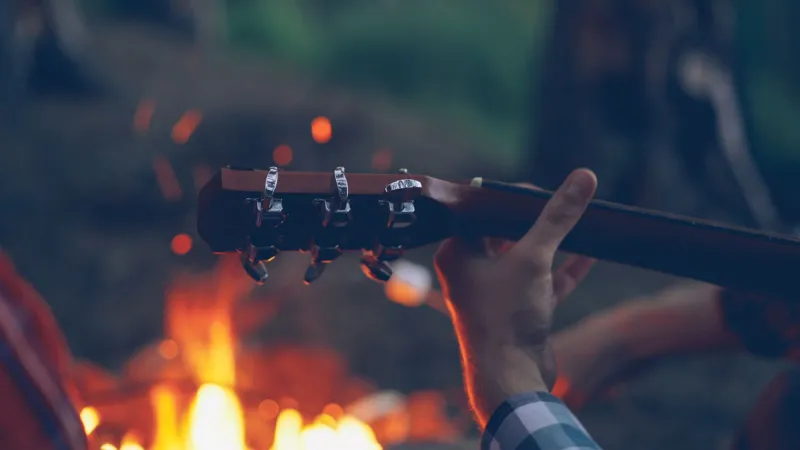
Somewhere between a crackling campfire and a honky-tonk jukebox, America found its voice. Or maybe it never lost it — maybe it just swapped the storyteller's mouth for a steel guitar and kept right on going.
That's the quiet truth sitting underneath a whole lot of country music: the songs you grew up hearing on the radio, the ones that made your dad go quiet on long drives or your grandmother hum along without realizing it, they didn't come from nowhere. They came from the same deep well as Paul Bunyan, Pecos Bill, and every ghost that ever rattled chains in an Appalachian hollow. Country songwriters have been unconscious mythmakers for generations, pulling from an oral tradition so old it predates the genre itself.
Let's pull back the curtain on that connection — and then hand you a listening guide to make the whole thing feel real.
The Frontier Story Was Always a Song in Disguise
Here's something worth sitting with: the tall tale and the country ballad were built in the same workshop. Both rely on a lone protagonist up against something impossibly big — nature, fate, a broken heart, a corrupt system. Both use exaggeration as a form of emotional truth. And both were designed to be shared, passed from person to person in real time, in a room full of people who needed to feel something together.
When frontiersmen gathered around fires in the 1800s and spun yarns about Paul Bunyan dragging his axe to carve out the Grand Canyon, they weren't just entertaining themselves. They were processing a landscape so vast and unforgiving it barely made sense. The exaggeration was a coping mechanism dressed up as comedy. Sound familiar? That's basically the emotional architecture of half the classic country catalog.
Hank Williams didn't invent the lonesome wanderer — he just put a fiddle behind him.
Pecos Bill and the Outlaw Country Blueprint
Take Pecos Bill, the mythic Texas cowboy who could lasso tornadoes and ride mountain lions. He's chaotic, untameable, and ultimately tragic — the legend ends with him riding a cyclone straight into legend, never quite landing back in the ordinary world.
Now think about outlaw country. Think about Waylon Jennings singing about being born to lose and loving every minute of it. Think about Willie Nelson's road-worn characters who can't stay put, can't be domesticated, can't come home even when they want to. The outlaw country movement of the 1970s wasn't just a reaction to Nashville's polished production style — it was a direct cultural descendant of the tall tale hero who was too big for any fence you tried to build around him.
The tornado Pecos Bill rode? That's the open road in "On the Road Again." Same myth, different century, different instrument.
Appalachian Ghost Stories and the Country Ballad of Loss
Shift east from Texas and you hit a completely different flavor of American folklore — the Appalachian tradition of ghost stories, haints, and spirits that don't quite leave when they should. These weren't just spooky bedtime stories. They were a community's way of holding grief, of keeping the dead present in a world where loss came fast and hard.
That emotional function maps almost perfectly onto the country murder ballad and the grief song. Dolly Parton's "I Will Always Love You" operates in that same spiritual register — the beloved who's gone but never fully absent. So does Patsy Cline's "She's Got You," where the ghost of a relationship haunts every ordinary object left behind.
The Appalachian storyteller who warned children about the woman in white at the creek bend and the Nashville songwriter who wrote about a woman still setting a place at the table for a man who left — they're doing the exact same emotional work. One just has a melody attached.
Paul Bunyan's Shadow Over the Working-Man Anthem
Paul Bunyan is, at his core, a story about labor. He's impossibly strong, impossibly hardworking, and the landscape of America literally reshapes itself around his effort. The Great Lakes? Bunyan's footprints filled with rain. The Rocky Mountains? Leftover debris from his logging camps.
That mythology of the worker who shapes the land with his bare hands flows directly into one of country music's most enduring traditions: the working-man anthem. Merle Haggard's "Workin' Man Blues." Johnny Cash's "Sixteen Tons" cover. Jason Aldean's "Dirt Road Anthem." These songs don't just celebrate hard work — they mythologize it the same way the tall tale did. The man with the truck and the calluses isn't just a character; he's a legend, and the song is the campfire where that legend gets told.
Bunyan's blue ox Babe might have been replaced by a pickup truck, but the storytelling impulse is identical.
The Listening Guide: Pair Your Tall Tales with Your Twang
Ready to hear these connections in real time? Here's a curated pairing list to put on next time you want to feel the mythology move through the music.
Paul Bunyan → "Big Green Tractor" by Jason Aldean The man who bends the land to his will, now with a John Deere and a love interest. The scale is smaller; the myth is the same.
Pecos Bill → "Mammas Don't Let Your Babies Grow Up to Be Cowboys" by Waylon & Willie The untameable frontier hero, now a cautionary tale sung with a wink. He still can't be domesticated. You still kind of wish you were him.
Appalachian Ghost Yarns → "The Night the Lights Went Out in Georgia" by Reba McEntire Southern Gothic, wrongful death, a ghost of injustice that lingers long after the song ends. This is a haint story with a hook.
John Henry (the steel-driving man) → "Working Man" by Ricky Skaggs The legend of the man who outworked a machine and died for it — reborn as every song about dignity in labor and the cost of keeping up.
Brer Rabbit → "A Boy Named Sue" by Johnny Cash The trickster who wins through wit rather than strength, wrapped in one of Cash's most beloved story-songs. The folklore shape is unmistakable once you see it.
The Fire Never Really Went Out
Here at Tunes For Tales, we believe that melody and mythology are two sides of the same coin — and country music might be the clearest proof of that anywhere in American culture. The campfire didn't go dark when the frontier closed. It just moved indoors, got amplified, and started selling records.
Next time a country song catches you off guard — makes you feel something you can't quite name — consider that you might be hearing a very old story told in a very new way. The tall tale and the twang have always been in conversation. We're just finally listening close enough to hear both voices at once.