Songs That Held the Sky Up: How Native American Creation Melodies Outlasted Everything Meant to Silence Them
There's a moment in certain Native American ceremonial songs where the rhythm stops feeling like percussion and starts feeling like something older — like a heartbeat that predates the land itself. That's not poetic exaggeration. For countless Indigenous communities across what we now call the United States, song wasn't decoration layered onto a story. Song was the story. The melody was the memory. And when colonial forces systematically dismantled language, ceremony, and community, the music — stubborn and shape-shifting — found ways to survive.
This is about those songs. And the people carrying them forward.
The Original Storytelling Technology
Before we talk about revival, it's worth sitting with just how sophisticated these musical traditions actually were. The Diné (Navajo) people of the Southwest have a body of ceremonial chants — the Blessingway, the Enemyway, the Nightway — that aren't simply songs about creation. They are creation, in the sense that performing them is understood to restore balance and harmony to the world. The Hózhó, or state of beauty and balance central to Diné cosmology, isn't just described in the music. It's enacted through it.
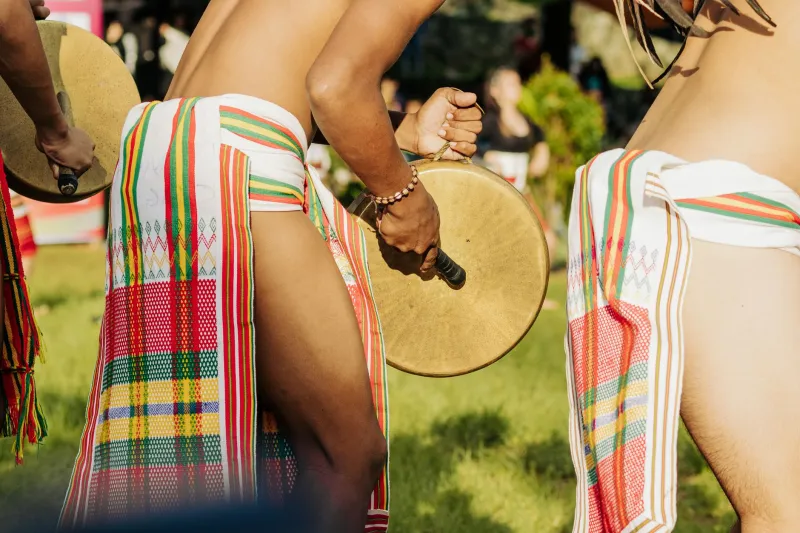
Further north, the Anishinaabe nations of the Great Lakes region encoded creation narratives into drum songs that mapped the relationship between Gitchi Manitou (the Great Spirit), the earth, and human beings across generations of oral transmission. The drum itself — the heartbeat instrument — wasn't an accompaniment to the story. It was the story's pulse, the physical reminder that everything alive shares a rhythm.
And in the Pacific Northwest, Haida and Tlingit song-stories carried cosmological knowledge about Raven, the trickster creator, in melodic structures so precise that deviating from them was considered a form of erasure. The tune wasn't aesthetic preference. It was archival accuracy.
What Silence Was Supposed to Accomplish
The U.S. government's boarding school era — roughly 1870 through the mid-20th century — was explicit in its goal: strip Native children of language, ceremony, and cultural identity. The famous (and horrifying) motto of the Carlisle Indian Industrial School was "Kill the Indian, save the man." Music was one of the first things targeted. Ceremonial songs were banned. Drums were confiscated. Children were punished for singing in their own languages.
What's remarkable — and what deserves to be said plainly — is that it didn't fully work. Songs were hummed quietly in dormitories. Elders passed melodies through visits and letters. Some communities deliberately encoded sacred material into forms that looked innocuous to outside authorities. The music adapted. It went underground, and it waited.
The Living Voices Bringing It Back
Here's where the story gets genuinely exciting, because this isn't a eulogy. It's more like a dispatch from a very alive tradition finding its footing in a new century.
Pura Fé, a Tuscarora artist, has spent decades weaving traditional song-stories into forms that reach contemporary audiences without sacrificing their roots. Her work doesn't sanitize the sacred — it contextualizes it, inviting listeners into a relationship with material that has real cultural weight. She's spoken openly about the responsibility she feels as a carrier of these traditions, and that seriousness comes through in every note.
Raye Zaragoza, a Akimel O'odham and Mexican-American singer-songwriter based in the US, blends Indigenous storytelling frameworks with folk and indie pop in ways that feel both urgent and ancient. Her approach is less about strict preservation and more about demonstrating that these stories are current — that creation myths aren't past tense when the land they describe is still here, still contested, still alive.
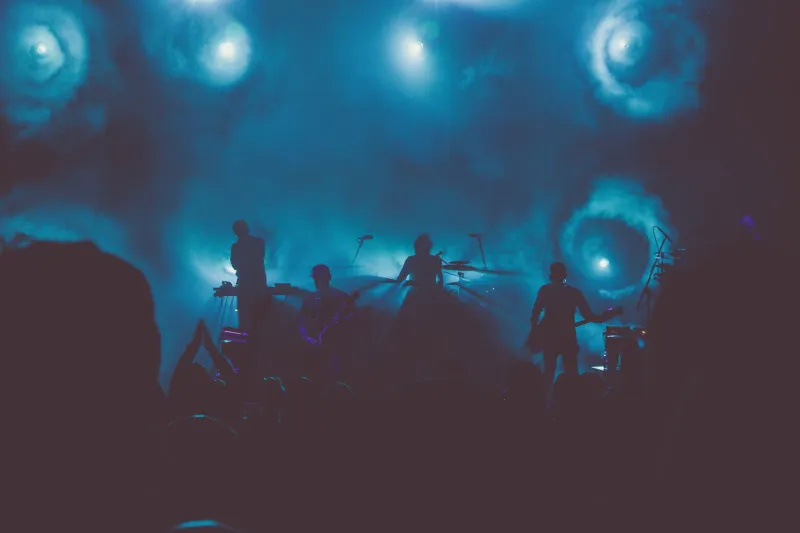
Then there's the work happening in the Northern Plains, where artists connected to Lakota and Dakota communities are pairing traditional vocables — the non-lexical syllables that carry enormous ceremonial meaning — with contemporary production. Groups like Sioux band Brulé have brought this synthesis to mainstream American stages, showing audiences that the pentatonic scales and rhythmic structures of Plains music aren't exotic artifacts. They're a living musical language.
The collective Snotty Nose Rez Kids, though Canadian-based, has influenced a generation of Indigenous artists on both sides of the border with their model of hip-hop as a vessel for traditional storytelling — proving that the container matters less than the integrity of what's inside.
Why Melody Survives When Words Don't
Linguists and ethnomusicologists have noted something fascinating about the relationship between song and memory in oral cultures: melody functions as a kind of mnemonic architecture. The tune gives the mind handholds. It organizes sequence, signals emphasis, and creates emotional anchors that make recall more reliable across generations.
In practical terms, this means that communities who lost fluency in their original languages during the boarding school era sometimes retained song even when the words became opaque. The melody survived as a kind of placeholder — a promise that the meaning could be recovered. And in many cases, it has been, through language revitalization programs that use song as the entry point back into vocabulary and grammar.
That's not a coincidence. It's the original design.
What It Means to Listen
If you come to this music as an outsider — and most of us reading this on a site about melodies and mythology probably are — there's a real question of how to engage respectfully. A few things worth knowing:
Not all Native music is meant for general audiences. Some ceremonial songs are specifically not for public consumption, and contemporary Native artists are often very clear about which of their work is and isn't appropriate to share broadly. Following their lead isn't just courtesy — it's the bare minimum.
Streaming platforms have made it easier than ever to find Native artists who are actively choosing to share their work with wider audiences. Supporting them financially — buying albums, attending shows, following their social channels — is a more meaningful form of appreciation than passive listening.
And maybe most importantly: approach these songs as living things, not museum pieces. The creation stories encoded in Navajo chant or Anishinaabe drum song aren't relics of a vanished world. They're active interpretations of a world that is still here, still being made sense of, still being sung into existence one performance at a time.
The Melody That Remembers
At Tunes For Tales, we spend a lot of time thinking about the relationship between sound and story — how a tune can carry a narrative across centuries, how rhythm can hold meaning that words alone might lose. Native American musical traditions are, in many ways, the deepest expression of everything this site is about.
These aren't songs about creation myths. They are, in the most profound sense, the myths themselves — still vibrating, still reaching, still doing the work of holding the world together.
That's worth listening to. Carefully, and with gratitude.