Before the First Word, There Was a Song: How American Lullabies Quietly Wrote Our National Story

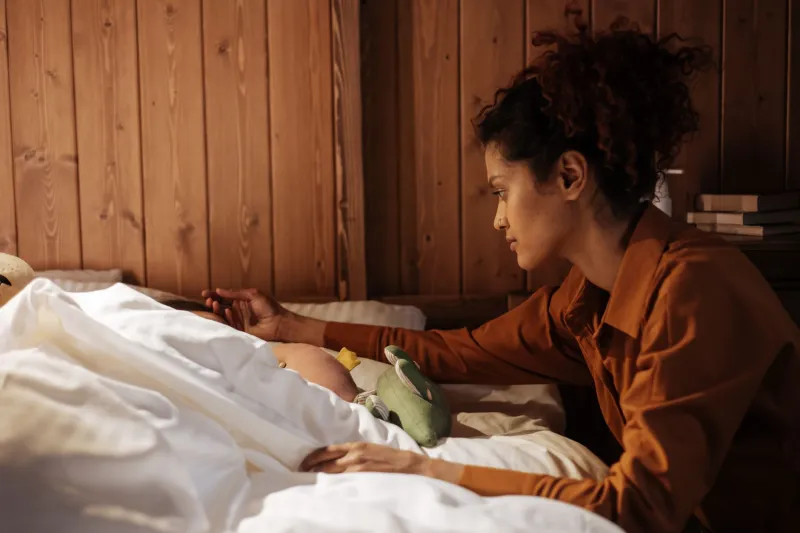
Think about the first story you were ever told. Chances are, you can't actually remember it — because it didn't arrive as words on a page or pictures in a book. It arrived as a melody, hummed softly above a crib, in a voice that smelled like home. American lullabies did something extraordinary without anyone really noticing: they encoded an entire nation's mythology into songs short enough to fit between one breath and the next.
We talk a lot about folk heroes, frontier legends, and the grand oral traditions that shaped American identity. But we almost never talk about the lullaby. And that's kind of wild, when you think about it — because no other musical form reaches people at a more formative, impressionable moment than a bedtime song sung to an infant who can't yet argue back.
The Appalachian Cradle and the Myths It Rocked
Deep in the mountain communities of Kentucky, Tennessee, and West Virginia, lullabies weren't imported from parlor songbooks. They were built from scratch, stitched together from the landscape itself. Songs like "Hush Little Baby" — which most Americans still recognize today — carry a specific kind of mythology embedded in their structure: the idea that the world can always be made right, that there's always another trade, another chance, another solution waiting just around the bend.
That's a frontier value dressed up in a nursery rhyme. The parent in that song isn't offering comfort through stillness — they're promising action. A mockingbird, a diamond ring, a looking glass. Each verse is essentially a miniature pioneer's bargain with the universe: if this doesn't work, we try something else. Resilience isn't taught through lectures in these communities. It's sung.
Other Appalachian lullabies drew directly from the natural world in ways that quietly reinforced a relationship between human life and the land. Mountains weren't just scenery — they were characters. Rivers weren't just geography — they were fate. When a child fell asleep to songs that personified the creek and the hollow and the ridge, they were absorbing a mythological framework that would color how they understood belonging, place, and identity for the rest of their lives.
Southern Spirituals and the Lullaby as Liberation Myth
Perhaps nowhere in American history is the lullaby more loaded with mythological weight than in the tradition of African American spirituals and the bedtime songs that grew from that root system. Songs sung to children in enslaved communities weren't just soothing — they were coded with meaning, threaded with longing, and quietly radical in their insistence on a dignity that the surrounding world refused to acknowledge.
Consider the way freedom appeared in these songs — not always as a political concept, but as a spiritual destination, a promised landscape just beyond the horizon. Children falling asleep to these melodies were being handed a mythological map. The imagery of crossing water, of reaching higher ground, of a better place waiting in the dark — these weren't accidental metaphors. They were survival tools wrapped in melody.
The lullaby, in this context, functioned as one of the most subversive storytelling vehicles in American history. It slipped past the gatekeepers of official culture precisely because it looked so harmless. A mother singing softly to a child — what could be more innocent? And yet inside those songs lived entire cosmologies of resistance, hope, and communal identity that would echo forward through gospel, blues, soul, and beyond.
The Pioneer Lullaby and the Mythology of the Open Road
As America pushed westward, lullabies traveled in covered wagons alongside cast iron pots and family Bibles. The songs that settlers carried with them — and the new ones they composed along the way — began to reflect a mythology of movement itself. Rest, in these songs, was often framed as temporary. Sleep was a pause between journeys, not an ending.
There's something almost restless in the American lullaby tradition compared to European counterparts. Where many Old World cradle songs leaned into images of permanence — the cottage, the hearth, the village that would always be there — American versions frequently gestured toward somewhere else. Tomorrow. The next valley. The river you hadn't crossed yet. Even in the act of putting a child to sleep, the mythology of the frontier kept whispering: there's more out there.
That tension — between the warmth of rest and the pull of the unknown — is one of the defining contradictions of American identity. And somehow, it got baked into bedtime songs before any of us were old enough to understand what a contradiction even was.
Why This Matters More Than We Think
Here at Tunes For Tales, we spend a lot of time thinking about how music and story intertwine — how a melody can carry a myth farther and deeper than any written text. Lullabies are maybe the purest example of that idea in action.
They bypass the critical mind entirely. They arrive when defenses are down, when the brain is drifting toward sleep, when the boundary between imagination and reality gets beautifully blurry. A child who hears the same lullaby hundreds of times isn't just memorizing a tune — they're internalizing a worldview. The values embedded in that song become part of the emotional architecture of who they'll grow up to be.
And when you look at the specific values that American lullabies tended to carry — resilience in the face of hardship, faith in a better horizon, the importance of community and land and identity — you start to see that these weren't random choices. They were cultural transmissions, carefully (if unconsciously) selected by generations of parents who understood, on some instinctive level, that they were handing their children more than a song.
They were handing them a mythology.
The Most Underrated Storytellers in American History
We celebrate the balladeers, the folk singers, the campfire storytellers. We write books about Paul Bunyan and Pecos Bill and the legends that shaped the American imagination. But the real myth-makers might have been the tired parents who sang softly in the dark, passing down a nation's deepest beliefs in the form of a gentle melody.
Next time you hear a lullaby — whether it's a classic you recognize or something new — try listening past the soothing surface. Ask what world it's describing. What values it's slipping quietly into a sleepy mind. What mythology it's building, one verse at a time.
You might be surprised how much of America you find hiding in a bedtime song.