Every Road Trip Song You Love Is Actually an Ancient Myth in Disguise
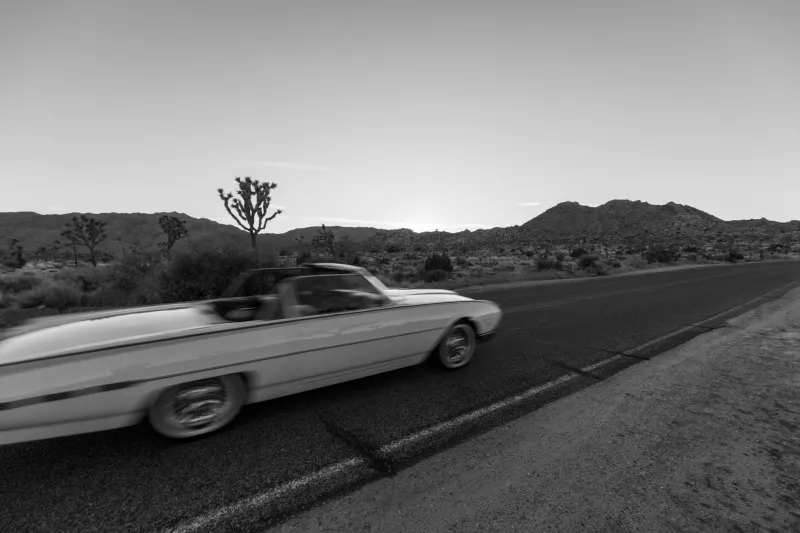
There's a moment every road tripper knows. Windows down, tank full, some song blasting through the speakers that makes the highway feel less like asphalt and more like destiny. You've probably never stopped to ask why certain songs hit that specific nerve — but the answer goes a lot deeper than a good chorus.
The truth is, the greatest American road trip anthems aren't just catchy. They're mythological. Not in the vague, hand-wavy sense, but in a very specific, traceable way. The same story structures, character archetypes, and symbolic landscapes that powered Greek epics, Norse sagas, and Native American oral traditions are alive and well inside the songs you've been singing since high school. Let's break it down.
The Open Road as the Hero's Journey
Joseph Campbell mapped the Hero's Journey in 1949, but the bones of that story — ordinary world, call to adventure, transformation, return — have been with us since humans sat around fires telling stories. And almost every great road trip song follows the exact same arc.
Take Bruce Springsteen's "Thunder Road." The whole song is a call to adventure. Mary's on the porch, the night is alive, and the narrator is essentially saying: the mythic road is out there, and if we don't take it, we'll never know who we could've been. That's not a love song. That's Odysseus standing on the shore of Ithaca before he ever left, staring at the horizon. The Promised Land — another Springsteen staple — goes even further, mapping the speaker's interior struggle directly onto a physical journey westward. The West, in American mythology, has always functioned the way Mount Olympus did for the Greeks: a place of divine possibility just out of reach.
Sheryl Crow's "Leaving Las Vegas" flips the script beautifully. Here, the road isn't salvation — it's aftermath. The hero has already been through the underworld (Vegas, in this case, doing a solid impression of Hades) and is now retreating, changed. That's the return phase of the journey, set to a jangling, sun-bleached guitar. Campbell would've loved it.
The Trickster Behind the Wheel
Not every road trip song is about noble questing. Some of them are pure Trickster energy, and that archetype is just as ancient.
The Trickster — Coyote in many Native American traditions, Loki in Norse mythology, Hermes in Greek stories — is the character who breaks rules, crosses boundaries, and reveals uncomfortable truths through chaos and humor. Tom Petty practically built a career channeling this figure. "Runnin' Down a Dream" isn't a song about discipline or direction. It's about the strange, inexplicable pull of movement for its own sake, following a feeling that doesn't make rational sense. Coyote would absolutely recognize that impulse.
Even more on-the-nose: "Take It Easy" by the Eagles. The narrator is spinning out, trying to make sense of a world that keeps throwing contradictions at him, and his solution is to just... keep driving. That's Trickster logic. Don't solve the problem — move through it. Change the scenery. The answer might be on the next exit ramp.
Highways as Sacred Geography
In Norse mythology, Bifrost is the rainbow bridge connecting the mortal world to Asgard. In Greek tradition, certain rivers and crossroads held sacred, sometimes dangerous power. American road mythology has its own version of this: Route 66.
Counting Crows' "Omaha," John Denver's "Take Me Home, Country Roads," and even Primus's weird, wonderful "My Name Is Mud" all treat specific American geographies as spiritually charged. These aren't just places — they're thresholds. Crossing into a new state, cresting a mountain pass, rolling into a town you've never seen — the songs treat these moments with the same reverence ancient storytellers reserved for encounters with the divine.
Native American traditions, particularly those of Plains nations, understood movement across landscape as inherently spiritual. The journey wasn't separate from the sacred — it was the sacred. When Springsteen sings about the Jersey shore or John Mellencamp name-drops small Indiana towns, they're doing something structurally identical: making geography holy through song.
Death, Rebirth, and the Long Drive Home
Some road trip songs don't end with arrival. They end with transformation — which, mythologically speaking, is often the same thing as a kind of death.
Tracey Chapman's "Fast Car" is one of the most heartbreaking examples. The song begins as an escape fantasy — the classic Hero's Call — and slowly, devastatingly reveals that the road didn't deliver what was promised. But that failure is the myth, too. In Greek tragedy, the hero's fatal flaw leads to a fall that teaches the audience something true. Chapman's narrator doesn't get her redemption arc, and that's exactly why the song has lasted decades. It's honest about what myths often aren't: sometimes you drive and drive and end up right back where you started.
Then there's "Born to Run," which promises something almost religious. Springsteen isn't just talking about leaving town — he's talking about spiritual rebirth through velocity. The song's climax is practically sacramental. That's resurrection mythology wearing a leather jacket and riding a Harley.
Why This Matters for How You Listen
None of this is coincidence, and it's not pretentious over-analysis either. Human beings are wired for mythological narrative. We've been telling the same core stories — the journey, the trickster, the promised land, the death and return — for as long as we've had language. Of course those patterns are going to show up in our music.
What's beautiful about American road trip songs specifically is how they fuse ancient myth with a deeply national identity. The road is America's most powerful symbol: freedom, possibility, restlessness, the perpetual promise that something better is just over the next hill. Every culture has its version of that myth. Ours just happens to run on gasoline and a four-four beat.
So next time you hit the highway and something comes on shuffle that gives you that particular, electric feeling — windows down, speedometer climbing, the world opening up ahead — know that you're not just listening to a song. You're participating in a story that's been told since the very beginning. The melody is new. The myth is ancient. And somewhere between the two, that's where the magic lives.