Five Strings and a Thousand Ghosts: Why the Banjo Has Always Spoken for the Dead
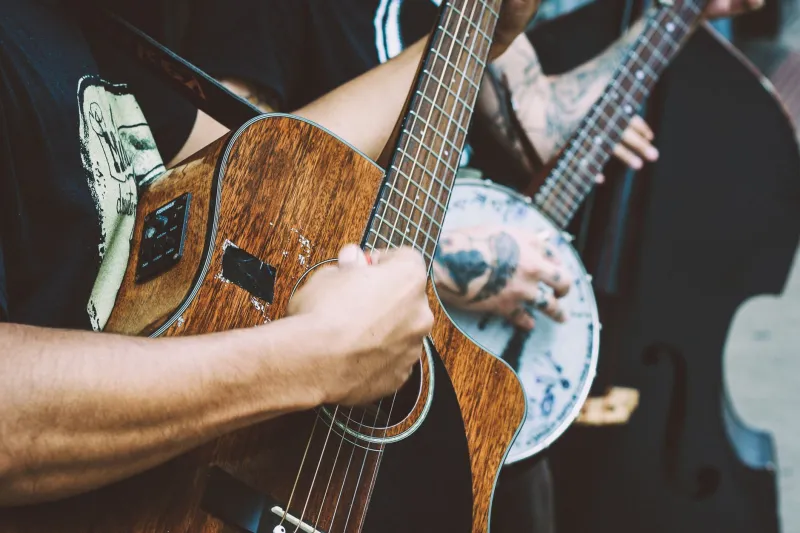
There's a moment — if you've ever heard a banjo played alone at dusk, out in the open somewhere rural and quiet — where the sound stops feeling like music and starts feeling like a message. Something in that high, hollow ring cuts through the air differently than a guitar or a fiddle. It doesn't just fill the space. It marks it. And if you know even a little of the history behind that instrument, you start to understand why. The banjo was never just a banjo. It was always something older, something with a memory longer than any single player's hands.
Built From the Sacred, Not the Stage
The instrument we recognize today as the banjo traces its roots directly to West and Central African ritual traditions — specifically to instruments like the akonting (a Jola skin-covered lute from Senegal and Gambia) and the ngoni of the Mande people. These weren't parlor instruments. They weren't entertainment in the casual sense we use that word now. They were tools of communication — with community, with history, and critically, with the dead.
In many of the West African traditions that shaped these early instruments, music wasn't performed for an audience. It was performed toward something — a spirit, an ancestor, a threshold. The drum-and-string combination that would eventually evolve into the banjo was understood to carry vibrations that the living ear wasn't the only intended receiver of. When enslaved Africans were forcibly brought to the Americas and stripped of almost every material connection to their home cultures, music — including these ancestral string instruments — became one of the few threads that survived the crossing. The banjo, in its earliest American forms documented by colonial observers in the Caribbean and the American South as early as the 1600s, arrived already loaded with mythology.
That mythology didn't disappear when the instrument changed hands. It traveled.
The Appalachian Inheritance
By the time the banjo had woven itself into the fabric of Appalachian folk culture in the 18th and 19th centuries, something interesting had happened: two rich traditions of spirit lore had braided together around the same instrument. The African ancestral mythology that came embedded in the instrument's DNA met the Scottish and Irish immigrant folklore that already populated the mountain hollows with banshees, haints, and things that moved between worlds. The banjo became the point of contact.
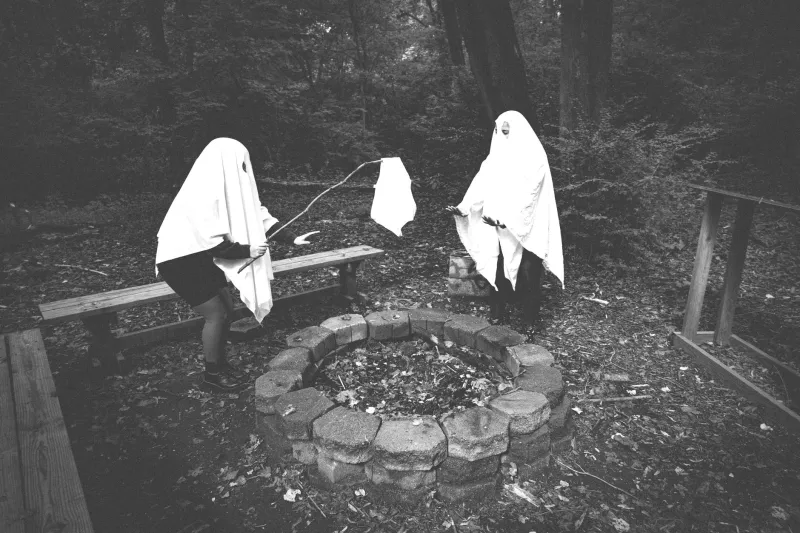
In Appalachian folk tradition, the banjo occupies a deeply liminal role. Liminal — meaning threshold, in-between, neither one thing nor the other. Bridges, crossroads, riverbanks at midnight — these are the classic liminal spaces in American ghost lore, and the banjo is their unofficial soundtrack. Regional stories from Kentucky, West Virginia, and the Carolina mountains describe banjo music drifting from empty fields or abandoned homesteads as a warning sign. Not a performance. A signal. Travelers were advised to turn around if they heard picking with no visible player. The sound, in these traditions, meant the land between the living and dead had gotten thin.
This wasn't superstition for superstition's sake. It was a coherent mythology built around a real sonic quality — that eerie, open resonance that makes a banjo note linger in a way that feels almost conversational, like something answering back.
Songs That Carried the Spirits In
Look at some of the oldest banjo-driven folk songs in the American tradition and the mythology practically announces itself. 'Shady Grove' — one of the most enduring Appalachian ballads — is ostensibly a love song, but its minor-key structure, its obsessive circling refrain, and its imagery of shadows and hollow places have led folklorists to read it as a song about longing that crosses the boundary of death. The banjo in recordings of this song doesn't accompany the lyric so much as haunt it.
'Old Joe Clark' and songs in that fiddle-and-banjo tradition carry a propulsive, almost frantic energy that older musicians in the region sometimes described as music meant to chase — to drive off what shouldn't be lingering. The banjo's rhythmic drive in these contexts functioned like a sonic perimeter. You play loud enough, fast enough, and the darkness stays at the edge of the firelight. Stop playing and the circle breaks.
Then there's the tradition of graveyard songs — a loose category of banjo pieces played at or near burial sites as part of community mourning practices, particularly in African American communities in the Deep South where the instrument's roots were most directly preserved. The banjo here wasn't inappropriate or out of place. It was exactly right. It spoke a language the deceased might still recognize.
The Instrument That Remembers
What makes the banjo's mythological role so durable is that the instrument itself seems to resist forgetting. Unlike the guitar, which absorbed its mythology more quietly, the banjo wears its strangeness openly. That skin head — originally an actual animal membrane — gives it a voice that sounds like it's coming from inside something organic, something once alive. Early banjos made with groundhog or possum hide weren't just acoustically practical choices. They connected the instrument to the cycle of life and death in a way that was understood and intentional.
Modern luthiers who build traditional open-back banjos in the old style will tell you that the instrument's sound changes with humidity, temperature, and the age of the skin. It breathes. It responds to its environment in ways that a solid-body electric guitar simply doesn't. For communities that understood music as a living conversation with the past, that responsiveness wasn't a quirk of construction. It was the whole point.
Still Humming at the Edge
Today, you can hear the banjo's mythological weight in everything from Appalachian revival artists like the late, great Doc Watson to contemporary players like Rhiannon Giddens, who has spent much of her career explicitly excavating the African roots of the instrument and restoring the cultural memory that mainstream folk history spent decades whitewashing. When Giddens plays, you're not just hearing a musician. You're hearing a correction — a reclaiming of the full ghost story, not just the half that was deemed acceptable to remember.
And in film and television, the banjo has never lost its shorthand for the uncanny. Composers reach for it when they want to signal something ancient, something rural and unresolved, something that exists outside the comfortable logic of the modern world. That's not a coincidence born from cliché. That's cultural memory doing its job — imperfectly, filtered through a lot of noise, but still functioning.
The banjo arrived in this country already knowing things. It crossed an ocean carrying the weight of rituals older than the nation it helped build. It absorbed new grief, new mythology, new ghost stories from every community that picked it up and played it toward the dark. And it's still out there, on porches and in hollows and on small stages in listening rooms across America, doing what it has always done.
Not performing. Communicating.
If you hear it and feel something you can't quite name — that prickle at the back of the neck, that sense that the air just shifted — you're not imagining things. You're just finally hearing what the instrument has been saying all along.