The Mountains Called It First: How Appalachian Folk Music Wrote the Rules of Horror Long Before Hollywood Showed Up
There's a moment in maybe a dozen different horror films — you know the one — where the score drops everything except a single, wavering vocal line. No orchestra swell, no jump-scare brass hit. Just a voice, hanging in the air like smoke that won't clear. Critics call it haunting. Composers call it minimalist. Anyone who grew up within earshot of the Blue Ridge or the Smoky Mountains might just call it Tuesday.
Because that sound didn't originate in a recording studio in Burbank. It came down off a mountain, passed hand to mouth through generations of people who understood, almost instinctively, that the most unsettling thing music can do is leave something unfinished.
The Murder Ballad as Structural Horror
Let's start with the ballads, because they're the most obvious entry point and still the most underappreciated. Appalachian murder ballads — think "Tom Dooley," "Pretty Polly," "Knoxville Girl" — aren't just morbid folk songs. They're horror narratives with a very specific structural DNA that modern filmmakers have essentially lifted wholesale.
The formula goes like this: an ordinary setting, a slow creep toward violence, a moment of terrible action rendered almost casually in the lyrics, and then — crucially — an ending that doesn't resolve emotionally. The killer doesn't always hang. The ghost doesn't always explain herself. The listener is left standing in the field holding the weight of what just happened with nowhere to put it.
Sound familiar? It should. That's the exact architecture of films like Hereditary, Midsommar, and the Texas Chain Saw Massacre. The horror isn't in the act — it's in the aftermath that refuses to close. Appalachian balladeers were engineering that feeling before cinema existed as a medium.
The Flattened Seventh and Why Your Spine Knows It
Get into the actual notes and things get even more interesting. One of the signature melodic moves in traditional mountain music is the flattened seventh — dropping that seventh scale degree just below where Western ears expect it to land. It's a small deviation, but physiologically, it registers as wrongness. The brain anticipates resolution and the note sidesteps it.
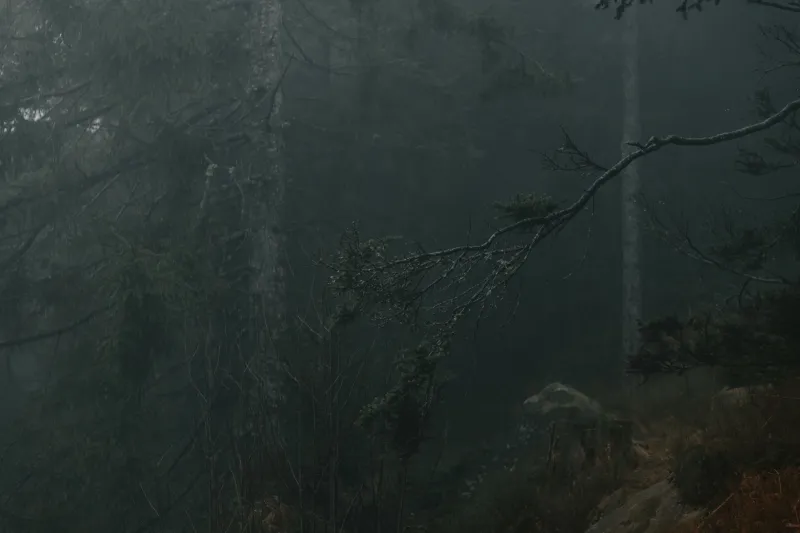
This isn't accidental folk charm. It's a feature. Appalachian musicians — many of whom were drawing on older modal scales brought over from the British Isles and further filtered through isolated mountain communities — leaned into that dissonance because it mirrored the landscape. These were people living in places where the fog didn't burn off until noon, where the woods pressed close, where the next ridge over might as well have been another country.
Now pull up the score to The Witch, or the opening theme from The Walking Dead, or virtually anything composed by Mark Korven or Ennio Morricone in his darker moods. That flattened seventh is everywhere. It's become the single most reliable shorthand for "something is wrong here" in contemporary film scoring. The mountains invented it. Hollywood perfected its deployment and rarely sends a thank-you card.
Shape-Note Singing and the Drone That Never Resolves
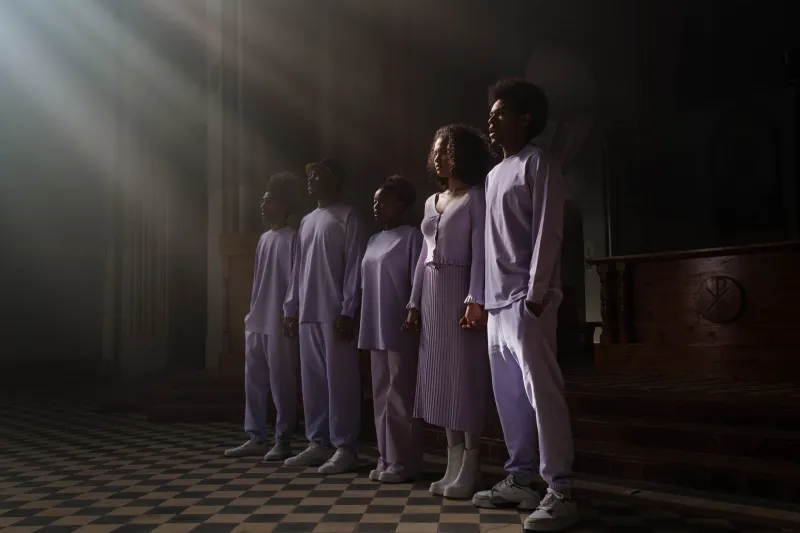
If murder ballads are the narrative horror tradition, shape-note singing — also called Sacred Harp singing, still practiced in communities across Georgia, Alabama, and Tennessee — is the atmospheric one. And it might be the more influential of the two, even if it's far less discussed outside of academic circles and very specific corners of the internet.
Shape-note music is loud, raw, and harmonically strange by modern standards. Singers face each other in a hollow square formation and produce a sound that is simultaneously communal and deeply isolating. The harmonies don't resolve the way trained ears expect. Dissonance is embraced rather than smoothed over. And then there's the drone — a sustained tonal center that certain voice parts hold while others move around it, creating a wash of sound that feels ancient and slightly threatening even when the text is explicitly devotional.
That drone is now a staple of horror scoring. The sustained low strings under a tense scene, the held organ note in a haunted church sequence, the single synthesizer pad that underpins an entire act of a horror film — these are all direct descendants of the Sacred Harp tradition's comfort with unresolved tension. Composers like Jóhann Jóhannsson used exactly this technique in Arrival and Mandy. The sound of dread-as-sustain didn't start with synthesizers. It started with people in church basements in rural Alabama singing from books with shaped note heads.
The Lonesome Call and Its Echo
There's another technique worth naming, one that's harder to pin down theoretically but impossible to mishear once you know it's there: the lonesome call. In Appalachian music, this is the moment when a single voice reaches out into the open — a yodel-adjacent cry, a falsetto break, a holler into the middle distance — and receives either silence or a faint, delayed echo in response.
It's the sonic embodiment of isolation. Of calling out and not being sure what calls back.
Modern horror scores use this constantly. The solo violin that seems to answer itself in a lower register. The child's voice that echoes slightly too late. The whispered lyric that repeats at half-speed under the main melody. These are all formalized versions of the lonesome call. They work because they trigger something primal — the fear of being alone in a large dark space and hearing your own voice come back changed.
Appalachian musicians weren't theorizing about psychoacoustics. They were just making music that matched the truth of their environment. But the emotional technology they developed was so precise that it transfers across a century and a half without losing a single volt of its charge.
Credit Where the Hollow Is Due
Here's the thing about all of this: Hollywood's relationship with Appalachian sound is complicated by a long history of treating the region as a punchline or a prop. The mountains get used as a setting for backwoods horror precisely because popular culture decided long ago that Appalachia was a place of otherness, of danger, of people who didn't fit the American mainstream.
That's a whole separate and ugly conversation. But embedded inside it is this smaller, musical irony: the very sonic language that makes those films feel scary was created by the communities being othered. The dread you feel watching The Hills Have Eyes or listening to the Deliverance banjo scene is partially manufactured using tools those communities built.
Giving the mountains their credit doesn't mean every horror composer needs to footnote their score. It means recognizing that Appalachian folk music was never a quaint relic waiting to be discovered and modernized. It was a fully developed, emotionally sophisticated tradition that understood the acoustics of fear long before anyone was selling tickets to experience it.
The campfire came first. The concert hall just learned how to amplify it.