When the Boogeyman Learned to Play: The Unspoken Soundtracks Behind America's Scariest Bedtime Stories
When the Boogeyman Learned to Play: The Unspoken Soundtracks Behind America's Scariest Bedtime Stories
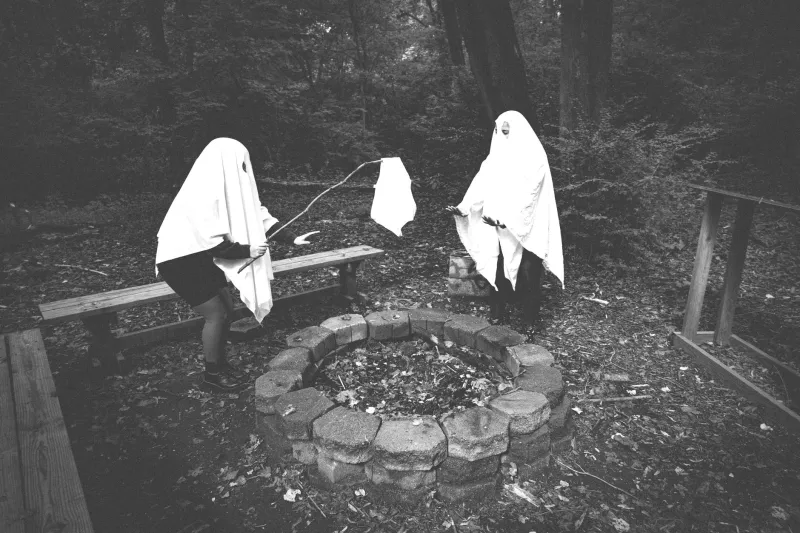
There's a specific kind of fear that only childhood knows. Not the sharp, logical fear of adulthood — more like a fog that rolls in through the window after the lights go out. Someone told you a story. Maybe it was your grandma on a back porch in eastern Tennessee. Maybe it was an older cousin at a campsite somewhere outside of Duluth. The details don't matter. What matters is that you felt it, somewhere below your ribs, long before you understood why.
Here's the thing nobody talks about: that feeling has a frequency. A pitch. A tempo. The best scary stories ever told to American children weren't just narratives — they were compositions without instruments, rhythms without drums. And when you start matching them to real music, something clicks into place that makes the hair on your arms stand up all over again.
Let's go there.
The Appalachian Boogeyman and the Drone That Never Resolves
In the mountain communities of Appalachia, the boogeyman wasn't a vague concept. He had names, habits, and a particular appetite for children who wandered too far from the porch after dark. These stories were functional — warnings wrapped in terror — and they carried a very specific emotional texture: something waiting. Something patient.
That texture has a musical equivalent, and it lives in the drone.
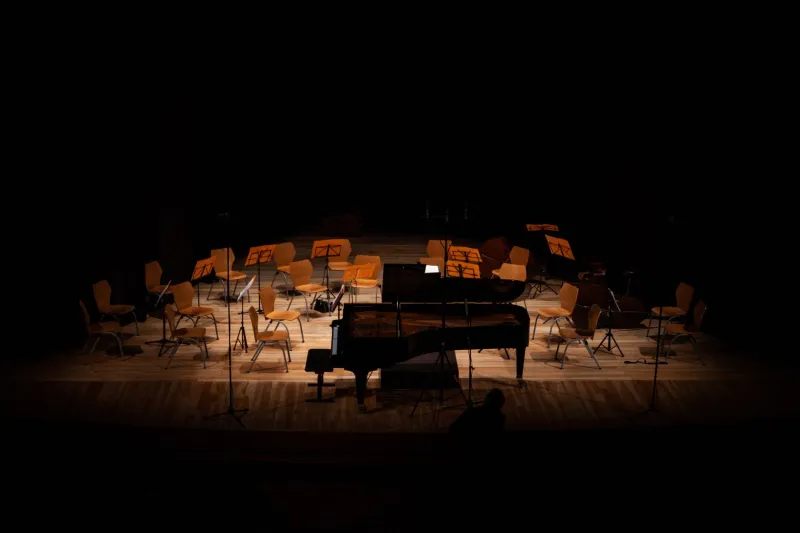
If you've ever listened to traditional Appalachian fiddle music and felt a low, sustained note humming underneath the melody like a held breath, you've heard it. The open-string drone on a mountain dulcimer, or the bowed bass note on a fiddle that never quite resolves into comfort — that's the sound of something lurking. Composers like Béla Bartók, who drew heavily from Eastern European folk traditions that share roots with Appalachian music, understood this instinctively. His Music for Strings, Percussion and Celesta opens with exactly that kind of creeping, unresolved tension. Play it at low volume in a dark room and tell me it doesn't feel like something standing just outside the tree line.
The drone works because it refuses to land. Your brain keeps waiting for resolution, for the musical equivalent of safety, and it never comes. That's precisely what the Appalachian boogeyman stories were engineered to do.
The Hook-Handed Stranger and the Minor Key's Long Memory
Move west and south and the stories shift shape. The Hook — that eternal campfire staple about the escaped killer with a blade for a hand — belongs to a different emotional category than the mountain boogeyman. Where Appalachian horror is ancient and atmospheric, the Hook is sharp and suburban. It's the 1950s fear of what lurks outside the parked car, outside the safe perimeter of postwar American life.
The musical match here isn't folk. It's the minor key string arrangement — specifically, the kind Bernard Herrmann perfected for Alfred Hitchcock. Psycho's shrieking violins are the obvious reference, but Herrmann's subtler work, like the score for Vertigo, is actually closer to the Hook's emotional register. It's not the stab of sudden violence but the slow, spiraling dread of knowing something is wrong before you can name it.
Minor keys trigger this response because of how deeply they're wired into human emotional memory. Musicologists have documented that minor-key melodies are processed differently in the brain — they activate regions associated with threat detection, not just aesthetic appreciation. The Hook story and the minor string arrangement are doing the exact same neurological work. One uses words. The other uses notes. Both are reaching for the same dark place inside you.
The Midwest Cautionary Tale and the Hymn That Curdles
The American Midwest gave us a particular flavor of children's horror: the cautionary tale with religious undertones. Stories about children who lied and were taken. Children who disobeyed and disappeared. There's a whole tradition of these in rural Ohio, Indiana, and Illinois — stories that lived in the uncomfortable space between Sunday school and the cornfield.
The musical counterpart to this archetype is the hymn played just slightly wrong.
Think about what happens when a familiar hymn — something you've heard in church your whole life, something that's supposed to mean safety and community — gets slowed down, dropped into a lower register, or played with a note just slightly flat. The familiarity makes it worse. Your brain recognizes the shape of the melody and expects comfort, but the distortion underneath it signals that something has gone very, very wrong with the world you thought you knew.
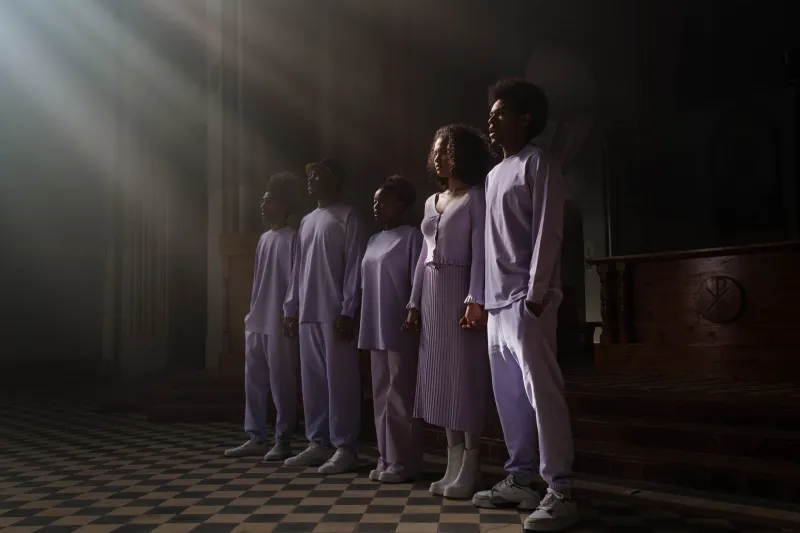
Composers use this technique deliberately. Charles Ives, himself a Connecticut Yankee who grew up steeped in American Protestant tradition, built entire compositions around the unsettling collision of hymn fragments with dissonant harmonics. His The Unanswered Question — a piece where a solo trumpet asks the same phrase over and over while the strings drone serenely underneath — captures exactly the spiritual unease at the heart of Midwest cautionary horror. The question is never answered. The comfort never fully arrives.
Why Droning Strings and Hollow Fifths Hit Different in the Dark
Across all these story traditions, certain musical elements keep showing up as natural partners to childhood dread. Droning strings. Hollow fifths — those open, ambiguous intervals that sound neither major nor minor, neither safe nor fully threatening. Slow tempos that mimic a held breath. The absence of percussion, which strips away the rhythmic safety net that most music provides.
These aren't accidents. They're convergent evolution — storytellers and composers independently arriving at the same emotional frequencies because those frequencies tap into something genuinely primal. The amygdala, the part of the brain that processes fear, responds to ambiguity more intensely than to clear threat. A minor chord, at least, tells you something definite. A hollow fifth tells you nothing, and that nothing is where the monster lives.
The best American children's scary stories have always understood this. They don't over-explain. They leave the shape of the thing in shadow. They give you just enough to let your imagination finish the work. And the music that matches them does exactly the same thing — it opens a door and waits for you to walk through it.
From the Campfire to the Concert Hall
What's remarkable is how seamlessly these folk-horror emotional templates have traveled from back porches into formal composition. Contemporary composers like Caroline Shaw and Nico Muhly, both deeply rooted in American musical traditions, write music that feels like it knows these stories. Shaw's string writing, in particular, has that quality of something ancient and slightly wrong — beautiful in a way that makes you nervous.
The campfire and Carnegie Hall aren't as far apart as we like to think. The grandmother who scared you half to death with a story about the hollow-eyed woman at the crossroads and the composer who writes a string quartet that makes a concert audience squirm are both doing the same thing: finding the frequency of dread and holding it steady long enough for you to feel it in your bones.
Some tunes aren't meant to comfort. Some are meant to remind you that the dark is real, and that it's been real for a very long time.
Good night. Sleep well.