Dusty Reels and Hidden Selves: Cracking Open Your Family's Secret Music History
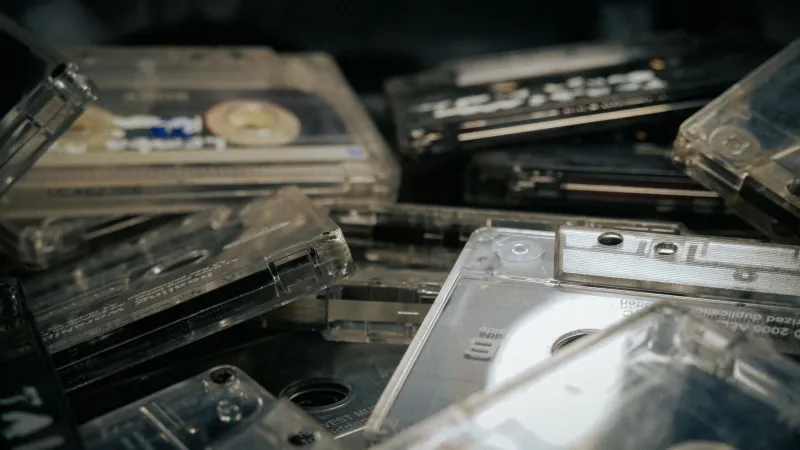
The attic in my aunt's house outside of Columbus smelled like cedar and old paper, and tucked behind a broken fan and a box of Christmas ornaments was a plastic grocery bag full of cassette tapes. No cases. Just tapes, their labels handwritten in fading ballpoint pen. Road Trip '84. Do Not Erase. For Diane — Don't You Dare.
I was thirty-two years old and I had never once heard my aunt mention that she had a Diane. I took the bag home.
This is a story a lot of us have, or are about to have. The music our parents and grandparents kept — tucked into drawers, rubber-banded in shoeboxes, stacked in milk crates in garages — is one of the most underrated archives in American family history. And more people are starting to dig.
Music as Time Capsule, Music as Confession
Here's what makes a mixtape different from a diary: it's curated evidence. Whoever made it had to choose. Every song on a handmade tape or a carefully assembled vinyl collection represents a decision — sometimes a desperate one — about what mattered, who you were trying to be, and what you needed people to feel.
Dr. Samuel Floyd, whose scholarship on African American music explored how communities encode identity in sound, wrote extensively about music as a form of cultural memory that outlasts the people who carried it. That same principle applies at the family level. A mixtape made in 1979 is a primary document. It's a mood board. It's a love letter or a breakup letter or a manifesto, depending on the track list.
When readers started sending us their stories about family music discoveries, a few patterns emerged immediately.
Kara, 41, from Portland, Oregon, found a crate of her late father's records while cleaning out his apartment. She knew him as a quiet, practical man — an accountant who drove a sensible car and wore khakis to barbecues. The records told a different story. "He had every Funkadelic album," she said. "Bootsy Collins. Parliament. There was a live recording of a show in Detroit from 1976 with his handwriting on the sleeve — he'd written the date and the words best night of my life. I cried for an hour. I had no idea."
Marcos, 36, from San Antonio, discovered a cassette labeled Summer '91 in his mother's closet while helping her move. It was full of corridos and narcocorridos — a genre his mother had always dismissed as "rough music" whenever it came on the radio around him. "She had opinions," he laughed. "Strong ones. And then there's this tape she made herself, with her handwriting, clearly something she loved at some point. It made me realize she had a whole life before she decided who she was going to be for us."
The Archaeology of the Hidden Track List
What does it mean to find music your family hid? Sometimes it's just embarrassing nostalgia — nobody needs to know their dad was really into Air Supply. But sometimes it's something more significant.
Music has always been one of the primary places Americans stored their rebellions. The teenager who listened to punk in 1977 didn't necessarily grow up to tell their kids about it. The young woman who played Joni Mitchell's Blue on repeat during a difficult pregnancy might have shelved that version of herself long before her children were old enough to ask questions. The mixtape in the attic is often the last remaining evidence of who they were before they became whoever they decided to show you.
That's not a small thing. That's an entire identity, compressed into seventy-two minutes of magnetic tape.
Social historians have increasingly turned to personal music collections as legitimate archival material. They can tell you about a person's peer group, their aspirations, their heartbreaks, their political leanings, and their sense of humor — often more reliably than any written document, because music is collected unconsciously. People don't always know what they're revealing when they save a song.
What the Silence Around the Music Means
Sometimes the most interesting part isn't the tape itself. It's the fact that it was hidden.
Why does music get hidden? A few reasons come up again and again. Sometimes it's music that belonged to a relationship that ended badly — an ex-boyfriend's band, a mixtape made by someone the family never talked about. Sometimes it's music that represented a version of the person they grew up out of, and keeping it felt like keeping a door open they'd decided to close. Sometimes, honestly, it's music that the people around them would have judged.
There's something quietly radical about the music people kept private. It was theirs. In households where everything was shared — meals, finances, space, noise — a cassette tape hidden in the back of a closet was a room of one's own.
How to Listen When You Find Something
If you're lucky enough to find a family music archive — even a partial one — here's how to approach it like the artifact it actually is.
First, note the format. Cassettes suggest a specific era (roughly late '70s through the '90s) and also suggest something handmade and intentional. Vinyl suggests either serious collecting or inherited taste. CDs with handwritten labels from the early 2000s are basically the last gasp of physical mixtape culture before streaming swallowed everything.
Second, look at the sequencing. On a deliberately assembled mixtape, the order of songs is a narrative. What opens? What closes? What gets placed right in the middle, where it can't be skipped? That structure tells you something about what the person was trying to say — even if they were only saying it to themselves.
Third, sit with the discomfort. You might find music that complicates your picture of someone you love or someone you've already lost. That's okay. People are complicated. The version of your parent who loved this particular song was real. So is the version you knew. They don't cancel each other out.
The Tune Behind the Story
At Tunes For Tales, we think a lot about the way music and narrative tangle together — how a melody can carry a whole life's worth of story in three minutes and forty seconds. Family music archives are maybe the most intimate version of that idea.
The cassette in the attic isn't just old media. It's evidence that someone you know was once someone you didn't. It's proof that the people who raised us had secret lives, quiet passions, and playlists they never got to play for us.
Dig around up there. You might find a stranger. You might find yourself.