When Nothing Plays: 7 Moments American Storytelling Used Silence Like a Weapon
We spend a lot of time talking about music. The right score, the perfect song, the melody that makes a scene. But there's a version of this conversation that almost never happens, and it might be the more important one: the conversation about what happens when the music stops.
America's greatest storytellers — in film, in literature, in the oral traditions that predate both — have always understood that silence isn't neutral. It isn't the absence of something. It's a presence with its own texture, its own temperature, its own specific dread. Here are seven moments where the quiet did more work than any score could have.
1. The Prairie Before the Storm — O Pioneers! and the Great Plains Tradition
Willa Cather's fiction is saturated with a specific kind of silence: the enormous, indifferent quiet of the Nebraska prairie. In O Pioneers!, that silence isn't backdrop — it's a character with intentions. When Cather's characters fall quiet alongside the land, it's never peaceful. It's the silence of something vast paying attention.
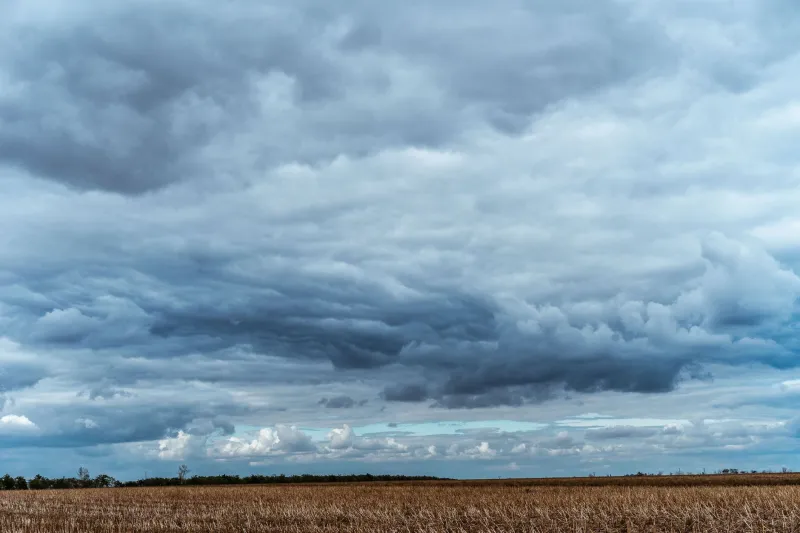
Frontier oral tradition across the Great Plains carried the same understanding. Stories passed down through farming communities consistently used the sudden absence of wind — of bird noise, of the ambient hum of a living landscape — as the signal that something was wrong. Not the storm itself. The quiet before it.
The hypothetical score: A single sustained low drone, almost below the threshold of hearing, with occasional tonal shifts that suggest wind without replicating it. No rhythm. No melody. Just the feeling of enormous space with something moving through it.
2. The Moment Before the Shot — No Country for Old Men
The Coen Brothers' adaptation of Cormac McCarthy's novel is one of the most sonically disciplined films in American cinema history. The composer Carter Burwell contributed a score that is itself mostly silence, and the film's most terrifying moments happen in rooms where nothing is playing.
The scene where Anton Chigurh knocks on a motel room door is almost completely silent. No sting. No building tension music. Just the knock, the question through the door, and the specific quality of quiet that follows. That silence does something no horror score could: it makes you fill the void with your own dread.
The hypothetical score: Literally nothing. Or — if you want to be precise — room tone. The ambient noise of an empty motel room at 2 a.m., recorded and played back at a volume just slightly too loud to ignore.
3. The Empty Church — Southern Gothic Oral Tradition
Across the American South, there's a recurring figure in local ghost lore: the church that goes quiet in the wrong way. Not the peaceful quiet of an empty sanctuary between services, but the sudden, absolute silence that falls when something that shouldn't be there walks in.
Collectors of Southern folk tales from the early twentieth century documented dozens of variants on this story from communities in Mississippi, Georgia, and Louisiana. The details change — the ghost, the reason, the outcome — but the silence is always described the same way: as a sound in itself. A negative sound. The noise of the normal world stepping aside.
The hypothetical score: A church organ, recorded and then reversed, so the sound seems to be inhaling rather than exhaling. Play it at half volume and let it fade to nothing over ninety seconds.
4. The Pause in the Testimony — To Kill a Mockingbird
Harper Lee understood silence as social architecture. The courtroom scene in To Kill a Mockingbird is full of spoken words, but its most devastating moment is a pause — the moment after Tom Robinson finishes speaking and before the jury's reality reasserts itself. In that gap, the novel holds open a space where justice is briefly, impossibly possible.
The 1962 film adaptation, with Elmer Bernstein's restrained score, handles this correctly by pulling the music back entirely at the film's most morally loaded moments. The silence isn't comfortable. It's an accusation.
The hypothetical score: A piano playing a single note — middle C — and then nothing. The reverb of that note decaying in a large room. The silence that follows as the room absorbs it.
5. The Hush of the Deep Woods — Appalachian Folklore
In Appalachian oral tradition, the woods have moods. And the most dangerous mood isn't the howling, crashing chaos of a storm — it's the hush. The moment when the forest stops making its ordinary sounds. No insects. No birds. No rustle.
Stories collected from communities across eastern Kentucky and western North Carolina describe this silence as the woods "holding their breath" — an image that gives the landscape not just agency but anxiety. Something is out there, and the trees know it before you do.
This is one of the oldest forms of American environmental storytelling, and it does something profound: it teaches listeners to read absence as information. The quiet isn't safe. The quiet is the warning.
The hypothetical score: Field recordings of a forest at dusk, played for thirty seconds, then cut to complete silence. No fade. Just a hard stop, so the listener's brain keeps generating the sounds that should be there.
6. The Dead Air — Early Radio Drama
In the golden age of American radio drama, dead air was the ultimate taboo — broadcast silence meant something had gone terribly wrong technically. Savvy radio writers weaponized this. They knew that a few seconds of complete silence on a radio broadcast would make listeners check their sets, lean toward the speaker, hold their breath.
Orson Welles, whose War of the Worlds broadcast is the most famous example of radio storytelling exploiting listener psychology, used silence strategically throughout his radio career. But it was the smaller, less famous productions — the regional horror anthologies and mystery serials of the 1940s — that used dead air most effectively, precisely because listeners trusted those programs less and feared the silence more.
The hypothetical score: Vintage radio static, fading slowly into silence, then a single voice speaking in a register just slightly too low to make out clearly. Then nothing.
7. The Last Line — American Short Story Tradition
The American short story has a long tradition of endings that land in silence. Carver. O'Connor. Cheever. The story ends mid-gesture, mid-breath, and the silence that follows on the page is where the real meaning lives. Readers have described finishing certain stories — O'Connor's "A Good Man Is Hard to Find" is a frequent example — and sitting in a kind of acoustic shock, as if the words had been making noise and then suddenly stopped.
This is silence as punctuation. Silence as the note that keeps ringing after the piano key is released. The story is over, but the sound of it isn't.
The hypothetical score: A string quartet, playing a simple four-note phrase. On the fifth repetition, they stop one note early. The missing note hangs in the air. You wait for it. It doesn't come.
The Thing About Empty Space
Every entry on this list works the same way: it creates an expectation of sound and then removes it, leaving the listener or reader to fill the void. And what we fill it with is always our own specific fear — which is why silence, handled well, is scarier than any score.
Music tells you what to feel. Silence asks you what you're already feeling.
America's storytelling tradition, at its deepest and most honest, has always known the difference. And it's chosen, at its most powerful moments, to ask.