Behind the Mask and the Music: How New Orleans Turns Sound Into a Spirit Conversation
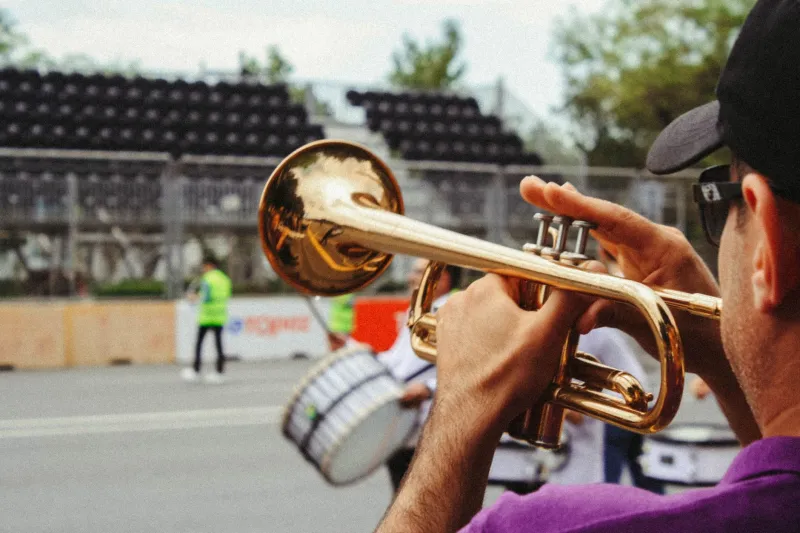
Walk through the right neighborhood in New Orleans on the right afternoon, and you might hear a brass band before you see it. The sound arrives around corners, bouncing off iron balconies and centuries-old plaster walls, and for a moment it's impossible to tell which direction it's coming from. It surrounds you. It fills the street the way water fills a bowl.
Locals will tell you that's not an accident. In a city built on the intersection of African, Caribbean, French, and Indigenous traditions — many of them carrying deep spiritual frameworks for how music moves between the physical world and whatever lies beyond it — the way sound behaves in space has always been considered meaningful. The brass band you can't locate is, in a sense, everywhere at once. Which is exactly where New Orleans music has always believed its most important audience to be.
The Funeral That Celebrates
The jazz funeral is probably the most famous example of New Orleans using music as a two-directional communication tool, and it's been written about enough that it's easy to miss how genuinely unusual it is. The structure — somber hymns on the way to the cemetery, jubilant second-line dancing on the way back — isn't a contradiction. It's a complete ritual with a specific spiritual logic.
The slow march in is for the dead. The music is formal, respectful, carrying the soul with dignity to the threshold. The raucous celebration on the way out is also for the dead — but it's the living telling them that the grief will be survived, that the community continues, and that joy will persist in their absence. It's a farewell and a promise simultaneously.
But there's a third element that often goes unmentioned: the music on the way back is also, in the tradition's deeper layers, an invitation. The boundary between the living and the dead in New Orleans spiritual life — shaped substantially by the Vodou and Spiritualist traditions that have existed in the city since its earliest days — is understood to be permeable. The second-line isn't just the living celebrating. It's the living creating a sound that the newly departed can follow home one last time, if they choose.
The brass instruments aren't incidental to this. In West African musical traditions that traveled to Louisiana through the slave trade, brass and percussion have specific functions in ceremonial contexts. The tuba's low frequencies are felt in the chest before they're heard by the ear. The snare's crack can stop a conversation mid-sentence. These are sounds that command attention — from everyone in range, living or otherwise.
Mardi Gras Indians and the Armor of Melody
If the jazz funeral is New Orleans' most visible spirit negotiation, the Mardi Gras Indian tradition is its most elaborate. The Black Masking Indians — groups of African American men and women who spend the entire year hand-sewing extraordinary feathered and beaded suits before taking to the streets on Mardi Gras morning — operate within a tradition that has its roots in both Indigenous American ceremonial practices and African spiritual frameworks.
The suits themselves are understood, within the tradition, as spiritual armor. The colors, the imagery, the feathers — all of it carries meaning that goes beyond aesthetic choice. And the music that accompanies the Indians through the streets functions as a kind of sonic extension of that protection.
The chants and call-and-response songs that Indian tribes sing as they parade aren't improvised street entertainment. They're a repertoire passed down within specific tribes, with lyrics and rhythms that have specific functions. Some are challenges — the ritualized confrontations between rival tribes that have replaced the actual conflicts of earlier generations. Others are invocations, calling on ancestors and spiritual guardians to walk alongside the tribe as they move through the city.
The percussion underneath those chants — tambourines, cowbells, hand drums — creates a wall of rhythm that Mardi Gras Indian scholars have connected to similar ceremonial drumming traditions in West Africa and Haiti. The beat doesn't just set the pace. It opens something.
The Spirit of Celebration as Camouflage
One of the cleverest things about New Orleans' spiritual musical traditions is how effectively they hide inside celebration. To an outside observer, Mardi Gras is a party. A jazz funeral is a colorful piece of local culture. The Zydeco band at the neighborhood bar is just good Friday night music.
But this camouflage has a history. During the colonial period and through the long years of American slavery and its aftermath, African spiritual practices in Louisiana were suppressed, criminalized, and driven underground. Music was one of the few forms of expression that couldn't be entirely controlled — and so the spiritual content migrated into the music, where it could exist in plain sight without being legible to those who would have prohibited it.
Congo Square, the open space in New Orleans where enslaved people were permitted to gather on Sundays and maintain their musical and cultural traditions, is often cited as the birthplace of American popular music. What's less emphasized is that it was also a space where spiritual practices were kept alive through rhythm and song. The drumming that happened in Congo Square wasn't recreational — or rather, it wasn't only recreational. It was ceremonial, communicative, and deeply connected to traditions that understood music as a bridge between worlds.
That history is still audible in New Orleans music today, if you know what you're listening for.
Bourbon Street vs. the Back Streets
It's worth noting that the most spiritually loaded musical traditions in New Orleans are generally not the ones that tourists encounter first. Bourbon Street's clubs offer a version of New Orleans music that's been polished for outside consumption — still great, still rooted in the city's extraordinary history, but not where the deepest ritual content lives.
The second-line parades that wind through neighborhoods like Tremé and Central City on Sunday afternoons, organized by Social Aid and Pleasure Clubs, are carrying something older and more intentional. The Mardi Gras Indian practice, which reaches its peak on Super Sunday and St. Joseph's Night, is not a performance for visitors — it's a ceremony for participants. The jazz funerals that happen organically when a community loses a musician are not staged for cameras.
These are living ritual practices. The music is doing something specific, in a specific place, for a specific community that includes members who are no longer technically alive.
An Open Invitation
New Orleans musicians will often talk about their city's relationship with the dead in matter-of-fact terms that can catch visitors off guard. The spirits of the city's history — its musicians, its characters, its complicated and extraordinary cast of residents across three centuries — are not considered absent. They're considered present but shifted, existing in a different register that the city's musical traditions are specifically designed to access.
When a brass band plays a standard like "Just a Closer Walk with Thee" through the streets, it's not just a performance. It's a signal. When the Indians chant their ancient call-and-response, it's not just a parade. It's a conversation.
The music of New Orleans has always had two audiences. The living ones are the easier ones to see. The other ones — the ones the city has been playing for since before jazz had a name — are the reason the music sounds the way it does.
Listen long enough, and you'll feel them listening back.