Drum Lines and Dragon Bones: The Ancient Creatures Hiding Inside Your High School Marching Band
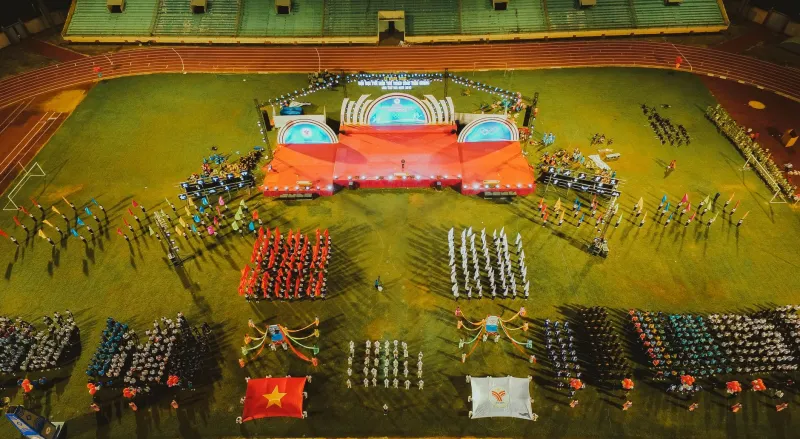
Picture a Friday night football game anywhere in America. The visiting team jogs onto the field, the home crowd stirs, and then — right on cue — the marching band erupts. Tubas growl. Snare drums snap. The brass section screams something that sounds like pure adrenaline wrapped in polyester uniforms. It's loud, it's familiar, and it feels about as mythologically significant as a bag of stadium nachos.
Except it isn't. Not even close.
What's actually happening on that field is something older and stranger than most band directors would ever bother to explain. American high school music programs have been quietly encoding ancient creatures, folklore monsters, and mythological symbolism into their traditions for generations — and the students playing those parts have almost never been told why any of it resonates the way it does.
The Monster at the Center of the Field
Let's start with mascots, because that's where the mythology gets obvious fast. Across the country, hundreds of schools have chosen creatures pulled straight from the oldest story traditions on earth. Dragons. Phoenixes. Gryphons. Titans. Trojans. Spartans. These aren't just cool-sounding names slapped on a helmet — they're characters with thousands of years of narrative weight attached to them.
When a school names itself the Dragons and commissions a fight song, that composer — whether they intended to or not — is stepping into a lineage that stretches from Welsh folklore to Chinese imperial mythology to medieval European bestiaries. The musical choices that follow tend to reflect that weight unconsciously. Dragon-themed fight songs almost universally lean into low brass, heavy percussion, and minor-key fanfares. That's not an accident. Those are the sonic textures humans have historically associated with power, danger, and the unknown.
Take the broad pattern of Phoenix-named schools scattered across the Sun Belt. Their band arrangements almost always feature a dramatic build — a musical "rising" structure where the melody climbs from something sparse and uncertain into a full orchestral blaze. You don't need a mythology degree to recognize what story that shape is telling. The composers absorbed it somewhere, and so did every student who ever played through that crescendo during a pregame rehearsal.
Fight Songs as Invocation
Here's a thought that might genuinely unsettle your next pep rally: a fight song is structurally almost identical to an ancient invocation chant.
Seriously. Strip away the school name and the references to whatever rival team is getting crushed this Saturday. What you're left with is a short, highly repetitive melodic phrase designed to be sung in unison by a large group, building collective emotional intensity toward a specific purpose. That is precisely what ancient Greek choruses did before battle. It's what Norse warriors chanted before a raid. It's what indigenous ceremonial music has done across cultures for millennia — call something powerful into the space, get everyone vibrating at the same frequency, and send that energy outward.
The Spartan-themed schools are a particularly interesting case here. Sparta's actual military culture was saturated with music — the Spartans famously marched into battle to the sound of aulos flutes rather than drums, maintaining a terrifying calm through melody rather than aggression. Modern schools invoking that name tend to go the opposite direction, opting for the most percussively aggressive arrangements their band budget allows. There's an irony there, but also something genuine: both traditions understand that music transforms a group of individuals into something unified and formidable.
The Percussion Section and the Underworld
If you want to find where ancient mythology lives most comfortably in a marching band, follow the drum line.
Percussion has always carried a specific cross-cultural association: the boundary between the living world and whatever lies beneath it. Shamanic traditions from Siberia to sub-Saharan Africa used drumming specifically to communicate with spirits and navigate non-ordinary states of consciousness. The steady, hypnotic pulse of a bass drum isn't just keeping time — it's doing something to human neurology that our ancestors understood intuitively long before anyone had a word for it.
High school drum lines have developed their own folklore around this, even if nobody frames it that way. The drum captain role carries an almost ritualistic gravity in many programs — they set the tempo, they hold the ensemble together, and every other musician on the field follows their lead whether they're consciously aware of it or not. In older storytelling traditions, that figure has a name. The one who beats the rhythm that others must follow, the one who stands at the threshold between chaos and order. You'll find versions of that archetype in practically every mythology that ever developed a sophisticated relationship with music.
Gryphons, Titans, and the Schools That Don't Know What They're Carrying
Some school mascots carry mythological baggage so dense it's almost comedic in a high school context. The Gryphon — half eagle, half lion — was the guardian of divine treasure in Greek and Persian mythology. It literally stood watch over gold that mortals weren't supposed to touch. Schools that adopt this mascot and then write peppy fight songs about winning the regional championship are, on some level, invoking a creature whose entire narrative purpose was to protect sacred things from human ambition.
Titans are even wilder. These are the beings that Greek mythology positioned as the generation of gods who came before the Olympians — primal, enormous, eventually overthrown and imprisoned. Calling your football team the Titans is essentially saying: we are the old power, the force that existed before the current order, and we are not done yet. That's a genuinely fascinating identity for a seventeen-year-old to march onto a field embodying, even if the halftime show is a medley of current pop hits.
What the Students Are Actually Learning
Here's where this gets genuinely meaningful rather than just fun to think about. Music education researchers have documented for decades that students who participate in band programs develop stronger pattern recognition, better emotional regulation, and a more intuitive sense of narrative structure. What's less discussed is why those benefits are so pronounced — and one compelling answer is that the musical traditions these students are entering are ancient ones, carrying the accumulated storytelling wisdom of cultures that understood sound as a fundamental human technology.
When a kid in a Midwest town spends three months perfecting the brass fanfare for their school's fight song, they're not just learning to read notes. They're absorbing a structure that humans have used to mark significant moments, summon collective courage, and tell stories about who we are and what we're capable of — for longer than anyone can fully trace.
The monsters in the mascot logos aren't decoration. They're the oldest characters in the story. And every time that drum major raises their baton and the band snaps to attention, the story starts again.
Maybe somebody should tell the tuba section.