The Algorithm Knows Before You Do: Streaming's New Role as America's Digital Fortune Teller
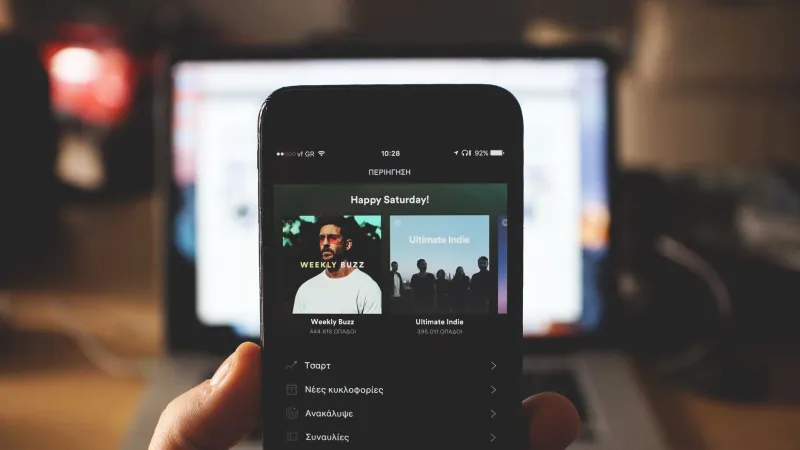
It's happened to almost everyone. You're driving home after a brutal day, the kind that hollows you out before you even hit the highway, and you hit shuffle. The first song that plays is exactly the one you needed. Not just good. Exactly right. The tempo, the key, the lyric that cuts straight to the thing you haven't said out loud yet. You didn't search for it. You didn't ask. And yet there it was, waiting.
That's not a coincidence anymore. Or at least, it doesn't feel like one.
From the Oracle at Delphi to the Discover Weekly Queue
Humans have always wanted something to tell them what comes next. The ancient Greeks trekked to Delphi to hear the Pythia breathe in volcanic fumes and speak in riddles that somehow, after enough interpretation, mapped onto their lives with unnerving accuracy. The Romans read entrails. The Norse cast runes. And now, in 2024, millions of Americans open Spotify on a Tuesday morning and let an invisible engine decide what their soul needs to hear.
The parallel isn't as absurd as it sounds. Oracles have never really been about magic — they've been about pattern recognition dressed in ceremonial robes. The Pythia's priests were interpreters, trained to match ambiguous utterances to the questioner's known circumstances. What Spotify's recommendation model does isn't so different: it reads your behavioral patterns, your listening history, the time of day, your location data, and the collective emotional signatures of millions of other users to assemble something that feels personally divined.
The difference is that the ancient oracle required a pilgrimage. This one lives in your pocket.
The Data Behind the Feeling
Here's what's actually happening under the hood, and it's both more mundane and more unsettling than pure mysticism. Spotify's algorithm — particularly the engine behind features like Discover Weekly and the Daily Mixes — uses a combination of collaborative filtering, natural language processing, and audio analysis. It maps acoustic features like tempo, danceability, and valence (a measure of musical positivity) onto your listening behavior and compares you to listeners with overlapping profiles.
But here's where it gets interesting. The system doesn't just track what you play. It tracks what you skip. It registers how long you let a song run before abandoning it. It notices when you replay a track at 2 a.m. versus when you play it at noon. Over time, it builds a shadow portrait of your emotional life — one you've never consciously constructed but have been drawing with every passive choice.
Psychologists call this affective computing, the idea that machines can infer emotional states from behavioral data. What streaming platforms have done is turn that inference engine into a jukebox. And the result, for many users, feels less like software and more like being seen.
When Prediction Starts to Feel Like Fate
There's a particular kind of story that circulates in music communities, usually told in hushed tones in Reddit threads and Discord servers. Someone loses a parent, and the algorithm surfaces a grief song they've never heard before the funeral even ends. Someone goes through a breakup, and three days later their Discover Weekly reads like a breakup album assembled specifically for their relationship. Someone is thinking about quitting their job, and suddenly their Release Radar fills with songs about freedom and open roads.
These stories accumulate into something that feels mythological. People start anthropomorphizing the algorithm, giving it intent it doesn't technically possess. They call it the playlist that knows. They talk about it the way earlier generations talked about dreams or omens.
And maybe that's not entirely irrational. In mythology, an oracle doesn't need to be supernatural to be powerful — it just needs to be accurate enough, often enough, to command belief. The algorithm clears that bar on a daily basis for millions of people.
The Trouble With Letting the Machine Weave Your Fate
But oracles have always come with a warning. The Greeks were meticulous about this. The Pythia didn't tell you what to do — she told you what was coming, and the interpretation was your responsibility. Get it wrong, and you ended up like Oedipus.
Streaming algorithms carry a quieter version of that same risk. When a system learns your emotional patterns well enough to predict your needs, it also learns how to keep you in those patterns. Recommendation engines are optimized for engagement, not growth. If you're sad and the algorithm has learned that sad music keeps you listening, it will keep feeding you sad music. It isn't malicious. It's just doing its job. But the effect can be a kind of emotional loop — a feedback oracle that reflects your current state back at you indefinitely rather than pointing you toward something new.
Mythology's oracles were uncomfortable precisely because they pushed people toward change. They issued challenges disguised as prophecies. A streaming algorithm that's too good at giving you what you already want is a very different kind of fortune teller — one that might be more interested in keeping you comfortable than in telling you the truth.
Reclaiming the Shuffle
None of this means you should delete your playlists or rage-quit your streaming service. But it's worth sitting with the strangeness of what we've built and what we've handed over to it. The fact that an algorithm can feel oracular is a testament to how deeply music is woven into our emotional lives — and how much data we're generating just by listening.
Maybe the move is to treat the algorithm the way the ancient Greeks treated their oracles: with curiosity, a little skepticism, and the firm understanding that the interpretation is still yours to make. Let it surface the unexpected song. But decide for yourself what it means.
Because the playlist that follows you home is only as prophetic as you let it be.